
Condition-based reporting
You get notes organized by roof area and component—field membrane, flashings, penetrations, drains, edges, and rooftop equipment interfaces—so your team can act without guesswork.
Serving Calgary, Alberta & surrounding areas
Mon–Fri 8am–6pm · Sat 9am–2pm
Commercial roofing · Calgary, Alberta
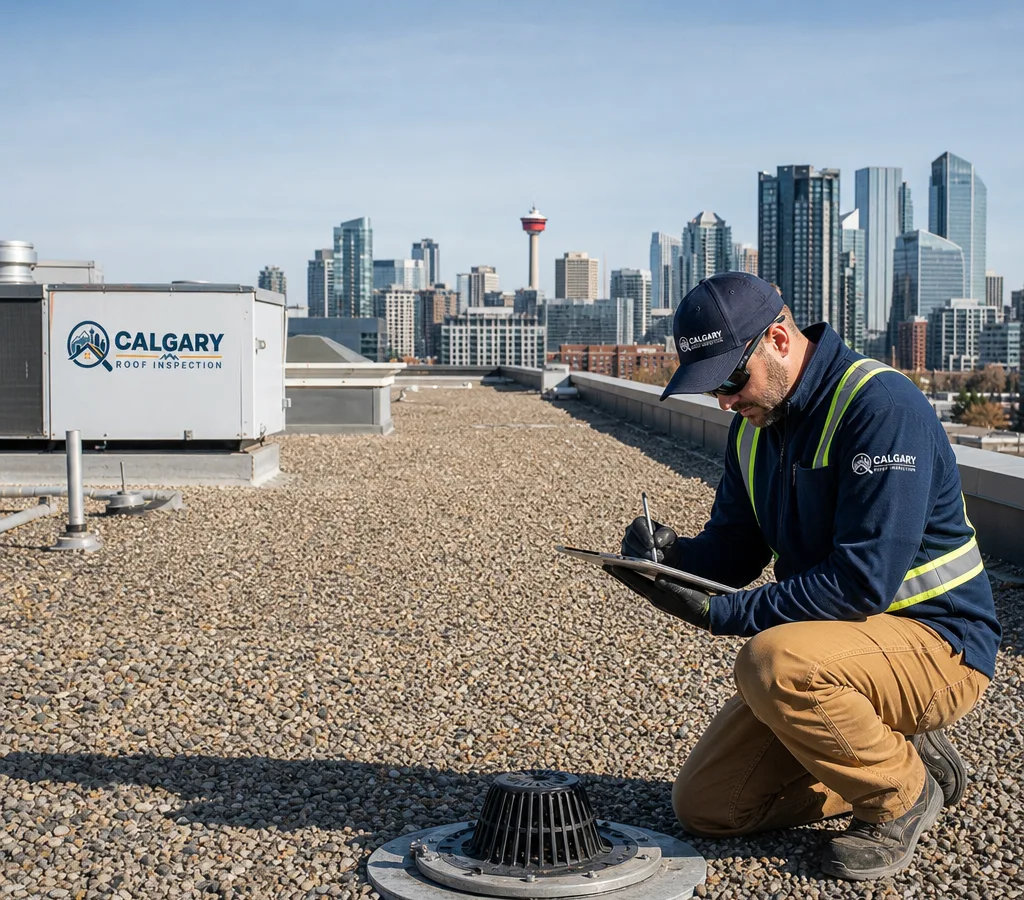
Protect your roof budget and your tenants with condition-based recommendations, photo documentation, and clear next steps for flat and low-slope commercial roofs.
Asset-focused roof planning
When you are responsible for a commercial property, the roof is an asset that needs documentation, prioritization, and a realistic plan. Our work in Calgary commercial roofing is built around that: we help property teams understand what is happening on the roof, what needs attention now, and what can be scheduled.
Calgary's weather puts commercial roofs through fast temperature swings, strong sun, wind events, and freeze-thaw cycles. On flat and low-slope systems, those conditions show up as membrane movement, seam stress, flashing fatigue, and drainage issues around scuppers and internal drains. The best way to control cost is to catch small failures before they become water entry, interior damage, or emergency service calls.
Calgary Roof Inspection supports building owners, property managers, and facility teams across Calgary, AB. If you need a second opinion, a maintenance baseline, or straightforward reporting you can use for budgeting and approvals, our team can help. If you are also comparing providers, a strong commercial evaluation should clearly document the roof system, its critical details, and the priorities your team can act on.
Actionable roof intelligence
You get notes organized by roof area and component—field membrane, flashings, penetrations, drains, edges, and rooftop equipment interfaces—so your team can act without guesswork.
We include photos that point to the exact detail being discussed, helpful for remote owners, internal approvals, and comparing changes at the next review.
We separate urgent leak-risk items from routine upkeep and longer-term planning, so you can assign work in the right order.
When work is needed, we describe it in plain terms that help you request pricing and compare bids fairly across contractors.
We work around tenant hours and rooftop equipment access, and we keep safety and roof protection top of mind during walkthroughs.
Flat and low-slope assemblies
Commercial roofs are rarely one-size-fits-all. Calgary properties often have multiple roof areas, transitions, and details that matter more than the membrane label.
We routinely work with flat and low-slope assemblies and components such as:
If your building has recurring leaks, many of the root causes are at details: transitions, flashings, and drainage. A targeted review can often clarify whether you are dealing with a localized repair scope, a maintenance gap, or a larger renewal decision.
Book Your Free Inspection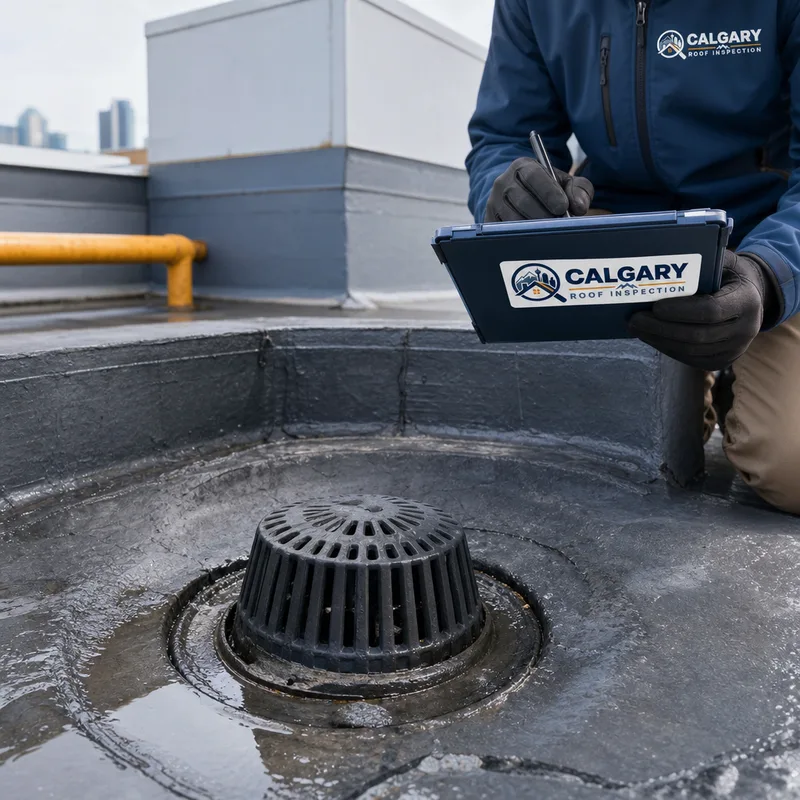
We start with what you are trying to solve: leak triage, baseline condition reporting, budget planning, due diligence, or comparing repair versus replacement. We confirm roof access, safety requirements, and any tenant or operational constraints.
We review field surfaces, seams or laps, flashings, penetrations, edges, and drainage paths. We pay attention to areas that fail first on commercial roofs: transitions, terminations, and spots where water sits or debris collects.
You receive a written summary with supporting photos. Items are grouped by roof area and severity so you can assign work, request pricing, and track what changes over time.
We talk through practical options. If work is required, we help translate findings into a scope that makes sense for procurement and scheduling.
Commercial roof budget context
Commercial roofing in Calgary typically ranges from about $8 to $20+ per square foot for replacement on flat and low-slope systems, while targeted repairs often land in the $500 to $5,000+ range depending on access and complexity. Preventive maintenance and minor sealing is usually at the lower end, while larger flashing rebuilds, wet insulation replacement, and multi-area scopes increase cost.
Final pricing depends on roof size, number of penetrations and edges, membrane type, how much saturated insulation must be removed, access and fall protection needs, and how the roof drains. Exact scope and costs are confirmed after an on-site roof review.
Calgary roof conditions
A commercial roof plan that works in Calgary takes local conditions seriously. Freeze-thaw cycles can open small pathways at laps and terminations, and wind events can stress edge metal and rooftop accessories. On flat roofs, drainage is a constant theme: blocked scuppers, overwhelmed internal drains, or low spots that hold water all raise the risk of premature failure.
Building type and roof traffic also matter. Retail and warehouse roofs with frequent service visits for rooftop units often see more punctures and wear around walk paths and curbs. Office and multi-tenant buildings tend to have more penetrations and add-ons over time, which means more flashing points to keep watertight.
We also see how logistics change by area. Downtown properties can have tighter access and stricter coordination with building operations. Larger sites in industrial areas often have wide roof fields and multiple elevations. Wherever your property sits, the goal is the same: document what is on the roof, identify the failure points, and keep small issues small.
If you are lining up professional documentation before you request pricing, a commercial roof inspection can be a practical first step for clarifying scope and setting priorities.
Common questions
It typically includes an on-roof review of membranes, seams or laps, flashings, penetrations, edges, and drainage, plus a written report with photos and recommended next steps. For Calgary properties, we also pay close attention to drainage performance and edge details because wind and freeze-thaw cycles can expose weaknesses quickly.
Most building owners schedule a roof review at least once per year, and also after major wind or hail events. Regular reviews help you catch flashing movement, seam issues, and drainage problems early, which is usually cheaper to address than leak response and interior repairs.
Yes. The decision usually comes down to the type and extent of failures—localized detail issues versus widespread membrane fatigue—evidence of trapped moisture in the assembly, and whether prior repairs are holding. We document what we see and outline practical paths forward so you can budget and procure the right scope.
Most leaks trace back to details rather than the middle of the roof field: flashings at penetrations, terminations at parapet walls, edge metal, and drainage points. Ponding water and debris buildup can speed up deterioration, especially around internal drains and low areas.
Yes. We are used to coordinating roof access, tenant hours, and rooftop equipment areas. The report format is designed to be shareable with remote owners and maintenance teams so everyone is working from the same information.
If you have active water entry, the first step is to document the interior symptoms and then prioritize likely entry points on the roof. Availability depends on weather and safe roof access, but we aim to triage urgent leak-risk situations as quickly as conditions allow and provide clear next steps for repair.
Protect the asset
Tell us what type of building you manage and what problem you are trying to solve. We will recommend a practical scope, document the roof conditions, and help you plan repairs or capital work with confidence.