
Leak-stopping first actions
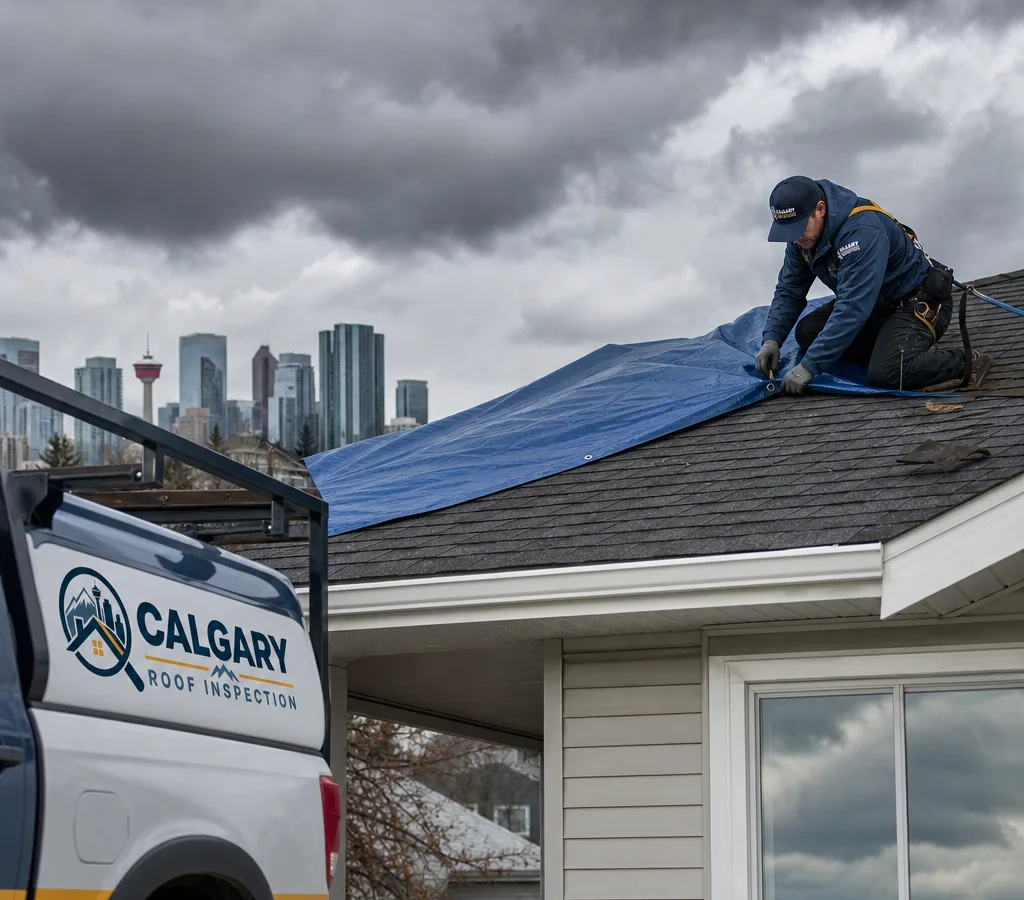
We prioritize measures that reduce water entry right away, such as controlled tarping, temporary sealing at penetrations, or replacing a small number of damaged shingles when conditions allow.
Serving Calgary, Alberta & surrounding areas
Mon–Fri 8am–6pm · Sat 9am–2pm
Emergency roof repair · Calgary, Alberta
When a leak starts or shingles blow off, you need the water stopped fast and the repair plan made clear. We respond quickly across Calgary with safe, practical fixes that protect your home until permanent work is complete.
Emergency assessment
A roof emergency rarely happens on a convenient day. Wind can lift and crease shingles, hail can crack mats and expose fasteners, and thaw cycles can push water under edges. If you are searching for Calgary emergency roof repair, the priority is simple: stop active water entry, make the area safe, then decide what needs a lasting repair.
Calgary Roof Inspection handles emergency roof repair Calgary homeowners and property managers rely on for quick triage after storms, sudden leaks, and surprise interior water stains. Emergency work is about control and containment first. Once the immediate risk is reduced, we document what we find and walk you through repair options in plain language.
Common situations we respond to include:
Once the roof is stable, a proper roof inspection helps confirm what is cosmetic, what is functional damage, and what should be scheduled next.
Practical emergency response
We prioritize measures that reduce water entry right away, such as controlled tarping, temporary sealing at penetrations, or replacing a small number of damaged shingles when conditions allow.
Storm conditions, steep slopes, and wet surfaces change what is safe to do immediately. We work within safe access limits and explain what can wait until conditions improve.
You get a written description of what was done as a temporary step and what is recommended as a permanent repair, so you can make a decision without guessing.
A leak at a vent boot, a valley, or an exposed nail is not handled the same way. We focus on the specific water path instead of blanket fixes.
Freeze-thaw and sudden wind events can reopen weak spots. We plan repairs around what will hold through the next weather swing, not just the next day.
Stabilize, trace, repair
Emergency roof repair is not a single product or a one-size patch. It is a set of actions chosen based on where water is getting in and what the roof system can safely tolerate right now.
Step 1: Identify the entry point, not just the ceiling stain. Water can travel along decking, trusses, and insulation before it shows inside. We trace the likely path from the roof surface down through the attic when accessible.
Step 2: Stabilize the vulnerable area. Depending on the problem, this may include tarping a slope, resecuring loose flashing, sealing around a vent, or replacing a small run of wind-damaged shingles. In Calgary, wind-driven rain can push water sideways and upward, so the stabilization method has to account for wind direction and overlap.
Step 3: Address the roof details that commonly fail first. Valleys, step flashing at walls, pipe boots, skylight curbs, and ridge caps are frequent leak sources. We check these points even when the visible damage is elsewhere.
Step 4: Set the next action plan. Temporary measures buy time. Permanent repair may be as small as replacing a flashing component, or it may involve a larger section if the underlayment or decking is compromised. You will know what is urgent, what is recommended, and what can be monitored.
If the emergency was triggered by hail or broad storm exposure, we can follow up with a targeted assessment. Many owners choose an inspection after a hail storm to document roof-level impacts that are easy to miss from the ground.
Book Your Free Inspection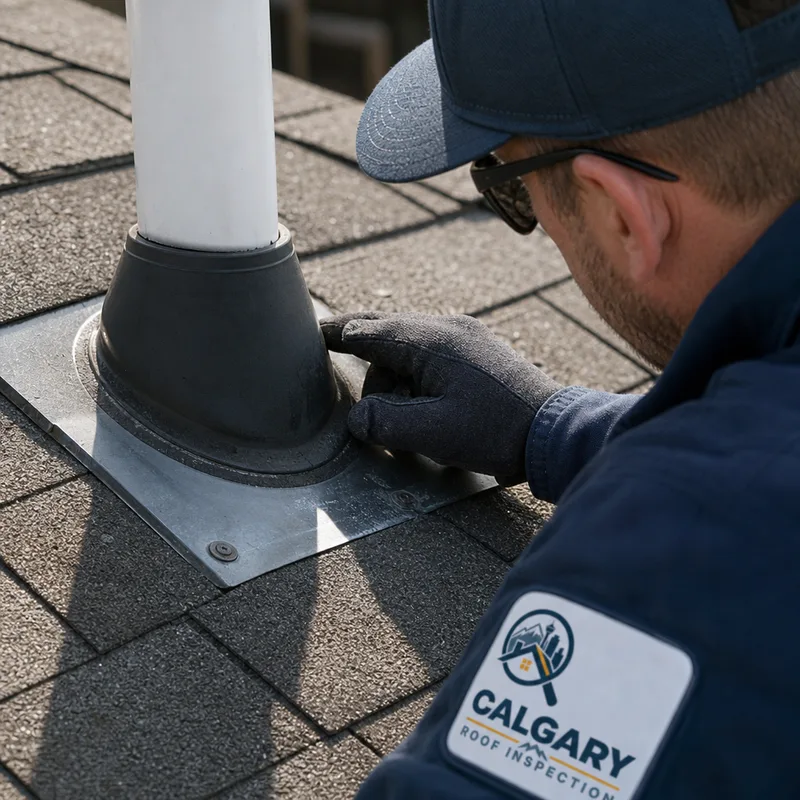
Five-step emergency response
You tell us what you are seeing inside and outside—active dripping, ceiling bubbling, or shingles on the ground. We ask a few specifics that help us arrive prepared and advise on immediate interior protection.
We assess roof access, wind exposure, and the most likely failure points. When possible, we confirm the source from the attic side and the roof surface.
We perform the most effective safe temporary or spot repair available for the conditions, with the goal of reducing water entry and preventing the damage from spreading.
You get a clear summary of what was done that day, what still needs to be repaired permanently, and the material choices involved, including shingle type, flashing method, sealants, and underlayment considerations.
If permanent work cannot be completed immediately because of weather, availability, or drying time, we schedule the next visit and confirm what to watch for in the meantime.
Calgary repair pricing
Emergency roof repair in Calgary typically ranges from about $350 to $1,500+, depending on roof access, the leak source, and whether a tarp or same-visit shingle and flashing repair is possible. A straightforward leak seal or small spot repair is often on the lower end, while extensive wind damage, complex flashing areas, or multi-point leaks can push costs higher.
Final pricing depends on slope and height, the number of affected areas, material matching, and whether wet materials need controlled removal to find the source. The exact cost is confirmed on site once we can safely assess the roof and the true entry point.
Limit interior damage
If water is actively coming in, a few practical steps can limit interior damage before we arrive.
In Calgary, wind can turn a small opening into a bigger problem quickly. Getting the roof stabilized early usually reduces how much wet insulation and drywall needs to be replaced later.
Homeowner experiences
“After a windstorm we had shingles missing and water marks starting on the ceiling. They came out quickly, stopped the leak, and explained what was temporary and what needed a proper repair once it dried out.
“The leak was around a vent and it only showed up during driving rain. They traced it properly instead of guessing, did a short-term fix that held through the next storm, then came back to finish the repair.
Common questions
Response time depends on weather and call volume, but we prioritize active leaks and storm damage that can worsen quickly. If conditions are unsafe for roof access—high wind, lightning, or icy slopes—we will still provide guidance on interior protection and schedule the earliest safe on-roof stabilization.
Sometimes we can, but safety and material performance set the limits. In heavy rain or strong wind, the most reliable immediate option is often a secure tarp or controlled temporary sealing at the most likely entry point, followed by a permanent repair when the roof surface is dry enough for proper adhesion and fastening.
We frequently find leaks at flashing transitions and penetrations, including pipe boots, step flashing at walls, valleys, and ridge cap failures after high wind. Hail can also crack shingles and ridge caps, creating openings that show up later when wind-driven rain pushes water under laps.
Tarping is a temporary stabilization measure, not the final repair. A properly installed tarp can protect the roof deck and interior while materials dry and a permanent fix is scheduled, but it should be treated as time to plan the correct repair, not as a long-term substitute.
We can sometimes match closely, but exact matches are not always available, especially if the shingle line is older or has weathered. In an emergency, the priority is stopping water entry with compatible materials and correct installation, then discussing the best cosmetic and long-term option once the roof is stable.
The most helpful details are whether water is actively dripping, which rooms are affected, whether you see shingles or metal pieces on the ground, and the roof type if you know it. A couple of clear photos from the ground of the damaged area and any interior ceiling staining can also speed up triage.
Protect your home now
Tell us what happened, where you see water, and when the issue started. We will help you protect the home now and outline the next steps for a lasting repair across Calgary and the surrounding area.