
Tear-off and deck review
A replacement is your chance to verify the roof deck condition. Any soft, delaminated, or water-stained sheathing needs to be identified and addressed before underlayment and shingles go on.
Serving Calgary, Alberta & surrounding areas
Mon–Fri 8am–6pm · Sat 9am–2pm
Roof replacement · Calgary, Alberta
When a repair no longer makes sense, a replacement should start with a clear roof inspection, a written scope, and recommendations that fit Calgary weather and current code expectations.

Start with evidence
If you searched roof replacement Calgary, you are probably dealing with recurring leaks, curling shingles, wind damage, or a roof that is simply at the end of its service life. A full replacement is a big decision, so the work should start with evidence: what is failing, why it is failing, and what has to change so the next roof performs better.
At Calgary Roof Inspection, we focus on replacement decisions that come from a thorough roof inspection and a clear explanation of options. That means documenting wear patterns, checking common failure points such as valleys, flashings, penetrations, and eaves, and calling out ventilation or attic moisture signs that shorten shingle life. You get a written scope you can understand before any tear-off starts.
Calgary conditions matter. Chinook-driven freeze-and-thaw cycles, hail exposure, and strong wind events can turn small weaknesses into repeat problems. A replacement plan that ignores underlayment selection, ice-and-water protection at eaves, proper flashing details, or balanced intake and exhaust ventilation often costs more later. A plan that gets those fundamentals right usually lasts longer and is easier to maintain.
If you want to understand the inspection-first mindset behind our recommendations, Roof Inspection is where most replacement projects begin.
Replacement standards
A replacement is your chance to verify the roof deck condition. Any soft, delaminated, or water-stained sheathing needs to be identified and addressed before underlayment and shingles go on.
Your scope should specify underlayment type and where ice-and-water membrane goes, typically at eaves and other vulnerable transitions. Details matter more than brand names.
Most roof leaks start at flashings, not in the shingle field. The scope should clearly cover plumbing vents, roof-to-wall junctions, chimneys where present, and skylights.
A new roof over a poorly ventilated attic can age early. Intake at the soffit and exhaust at the ridge or roof vents should be evaluated so moisture and heat have a controlled path out.
Edges and valleys take the most punishment in wind and runoff. A written scope should spell out edge metal, starter course, and how valleys are built and protected.
Ask how landscaping is protected, where debris is staged, how nail pickup is handled, and what the end-of-day safety plan looks like while the roof is open.
When repairs stop holding
A roof usually becomes a replacement candidate when the same symptoms keep returning or the underlying system is failing.
Common triggers we see in Calgary:
A good replacement recommendation ties symptoms to causes. For example, staining at ceilings can come from a flashing issue, an ice dam back-up, or condensation, and each one points to a different fix. We document what we can see on the roof surface and, when accessible, in the attic, then outline practical next steps.
You will also get guidance on how replacement work should be staged and specified so the result is durable and maintainable, not just new-looking on day one.
Book Your Free Inspection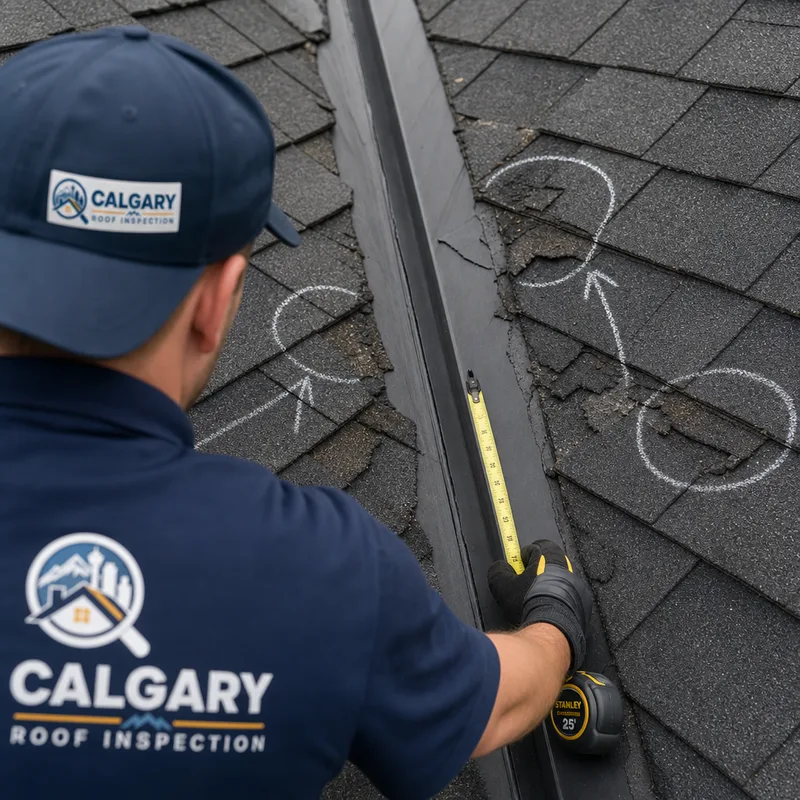
Five-step planning process
We inspect the roof surface for material condition and detailing issues, then document key areas such as valleys, penetrations, roof-to-wall transitions, and eaves. When accessible, we also note attic ventilation and visible moisture indicators.
You get a plain-language summary of what is happening, what is likely driving the failures, and which approaches make sense: targeted work versus full replacement. If replacement is recommended, we explain what should be included in the scope.
A replacement only prices well when the scope is specific. We outline the work items that affect performance and cost: tear-off approach, deck review expectations, underlayment and membrane locations, flashing requirements, ventilation considerations, and cleanup expectations.
We help you confirm practical details that prevent headaches: access and driveway use, material staging, protection for landscaping, and any known risks like steep pitches, multiple facets, or limited attic access.
After the replacement, it is smart to verify that the agreed scope was actually completed: correct flashing at penetrations, clean lines at edges and valleys, and no obvious installation defects. We can advise on what to look for so you feel confident signing off.
Calgary replacement pricing
Most roof replacement projects in Calgary typically range from about $8,000 to $25,000+, with smaller simple roofs at the low end and larger or more complex homes—such as steeper pitches, multiple valleys, and higher access—at the high end. Material choice also matters: standard architectural asphalt shingles are usually the most budget-friendly, while premium impact-resistant shingles and upgraded underlayments increase cost.
Final pricing changes with roof size, layers to remove, deck repairs discovered during tear-off, ventilation upgrades, flashing complexity, and site access for disposal and delivery. The exact cost is confirmed after an on-site inspection and a written scope tailored to your roof.
Homeowner experience
“We thought we needed a quick patch, but the inspection photos made it obvious why the leak kept coming back. The written scope helped us compare quotes apples-to-apples, and the replacement addressed ventilation and the flashing details that were actually failing.
“The biggest value was clarity. Instead of vague suggestions, we got a practical plan and a list of what to verify during the work. It made the whole replacement decision feel controlled rather than rushed.
Common questions
Most residential roof replacements take 1 to 3 days once work starts, but the schedule depends on roof size, pitch, number of facets and valleys, and weather. Wind, rain, or cold snaps can pause tear-off or shingle installation, so a reputable crew plans around forecast windows and protects the roof at the end of each day.
You usually replace when failure is widespread, the roof is near end-of-life, or problems are systemic, such as recurring leaks at multiple areas, chronic flashing or valley issues, or deck deterioration. If damage is isolated and the surrounding materials are still serviceable, a repair can be reasonable. An inspection that ties the symptom to the cause is the quickest way to avoid paying twice.
A comparable quote clearly states tear-off and disposal, what happens if damaged sheathing is found, underlayment type, where ice-and-water membrane will be installed, flashing replacement at penetrations and roof-to-wall areas, ventilation changes if needed, and cleanup. If any of those items are vague, two prices that look similar can represent very different work.
Impact-resistant shingles can be a good choice in hail-prone areas because they are designed to better withstand impacts than standard shingles, but they still need correct installation and good details underneath. The right answer depends on your roof geometry, budget, and how long you plan to stay in the home; we can explain tradeoffs after looking at your roof's exposure and existing condition.
Most post-replacement leaks trace back to details, not the shingle field: incorrect flashing at plumbing vents, poor roof-to-wall transitions, valley construction mistakes, or improperly handled skylights and chimneys. That is why a scope that specifies flashing method and verification points is as important as shingle selection.
Yes. A pre-replacement inspection is the best way to confirm whether replacement is actually needed and to define what the replacement should include. We document conditions that affect scope and price, then provide clear recommendations so you can move forward with confidence.
Plan with confidence
Tell us what you are seeing on your roof and when it started. We will inspect, document the findings, and give you a written scope and recommendations you can use to move forward with roof replacement in Calgary.